

Skitouring inNew zealand
This article was produced with the support of our New Zealand Partner Mountain School Alpine Recreation.
New Zealand is a ski-touring and freeride paradise—an awe-inspiring destination of snow-capped volcanoes, rugged peaks, and expansive alpine terrain. From June to October, both the South and North Islands deliver superb snowpack conditions for backcountry adventures.

Before we delve into the details, let’s take a look at the fundamental snow conditions that will shape your tour in New Zealand:
1. Persistent Weak Layers & Temperature Gradients
Strong temperature differences between the ground and snow surface often create fragile, gradient-formed layers that can fail catastrophically under load. Listen for the distinctive crunch and hollow sounds of a hard crust to identify these danger zones early.
2. Spatial Variability
Snowpack conditions can shift drastically within mere dozens of meters—wind-drifted ridgelines, sun-softened slopes, or icy northeastern aspects. Reading these micro-variations in terrain helps you pick safer lines and avoid sudden pitfalls.
3. Maritime Snowpack Dynamics
New Zealand’s maritime climate brings frequent freeze-thaw cycles and rain-on-snow events, resulting in a complex, multi-layered snowpack. Hard ice layers, wet powder, and solid spring snow often exist side by side, demanding gear like Fritschi Xenic and Tecton for consistent performance.
1. Essential Gear
Always
carry an avalanche transceiver, probe, and shovel, and know how to use them.
Consider carrying a slope inclinometer to assess slope angles. ECT cords must
be from wire or include specific cutting inserts to be useful in New Zeland.
Your cord needs to manage the cutting of icelayers. An extendable snow saw is
very helpful. Ski crampons as well as an ice axe and depending on terrain & conditions
boot crampons are often needed. Access
to snow often requires a “trekking approach” - bring a backpack large enough to
carry in supplies (45-50 l) for multi-day trips.
- Avalanche Transceiver, Probe and Shovel
- Slope Inclinometer
- ECT Cords
- Snow Saw
- Ski Crampons
- Ice Axe
- Boot Crampons
- 45 - 50 l Backpack

2. Avalanche Forecasting and Information
Here's an overview of the best information sources to help you safely go ski touring in New Zealand:
The New Zealand Avalanche Advisory (NZAA) (avalanche.net.nz)
This is your primary resource for up-to-date avalanche forecasts in New Zealand. 1 The NZAA provides daily forecasts for key mountain regions, including:
- Avalanche Danger Ratings: These ratings (Low, Moderate, Considerable, High, Extreme) indicate the likelihood and size of avalanches. Pay close attention to the danger rating for your intended touring area
- Avalanche Problems: The forecast details specific avalanche problems, such as wind slabs, persistent weak layers, and wet avalanches, including information on where they are likely to occur (aspect and elevation) and how to manage the risk
Please note: NZ & North American terminology of "Avalanche problem" differ from European - Current Snowpack Conditions: This section describes the depth of the snowpack, recent snowfall, and any layers of concern
- Trend: Information on whether the avalanche danger is expected to increase, decrease, or remain the same
- Sliding Danger: Warnings about icy conditions caused by melt-freeze cycles or rain crusts, with recommendations for carrying crampons and an ice axe
- User Guide: The NZAA website also offers a comprehensive user guide to help you understand the forecast and make informed decisions

Mountain Safety Council (MSC) (mountainsafety.org.nz)
The MSC is a valuable resource for avalanche safety education
and research. They publish analysis of avalanche incidents in New Zealand,
providing insights into contributing factors and trends. Their website also has
safety advice for backcountry snowsports.
3. Education and Training
- NZAA User Guide: Familiarize yourself with the NZAA forecast and its components
- MSC Resources: The Mountain Safety Council offers various resources, including online courses and information on safe practices in the backcountry
- Share Observations: The MSC encourages backcountry enthusiasts to share their snow and avalanche observations, which can contribute to a better understanding of conditions
New Zealand Avalanche Safety Resources
| Ressource Name | URL | Key Information Provided |
|---|---|---|
| NZ Avalanche Advisory (public & run by MSC) | Daily avalanche forecasts for 13 regions, snowpack conditions, mountain weather, educational resources. | |
| Mountain Safety Council MSC) public government | Backcountry snowsports resources, avalanche awareness information, ATES scale details, training information, preparation videos. |
4. weather information
Mountain weather can flip in an instant. Solid prep—and a deep dive into the latest forecasts—aren’t optional, they’re essential.
| Ressource Name | URL | Key Information Provided |
|---|---|---|
| Windy | A popular app and website for visualizing wind patterns, which is essential for understanding snow loading and avalanche risk | |
| Metvuw | Another weather forecasting website often used in New Zealand for detailed weather maps | |
| Meteoblue | A popular App similar to Windy | |
| MetService | Provides detailed weather forecasts for New Zealand, including mountain forecasts which are crucial for planning your ski tour. Very conservative in it’s word forecast | |
| NIWA Weather | Offers weather information, including specific forecasts for national parks |

5. Snow Conditions
“Hands in Snow”: Backcountry touring in New Zealand requires a basic understanding of simple snow tests to at least confirm or exclude the existense of weak layers that may be problematic. Information on those weak layers is included in the public avalanche forecast in the detailed description of the avalanche problems.
| Ressource Name | URL | Key Information Provided |
|---|---|---|
| NIWA Snow and Ice Network (SIN) | This tool provides near real-time data on snowfall, snowpack depth, snow melt, and climate from various alpine sites across New Zealand. This can help you understand current snow conditions in specific areas (scientific - expert use) | |
| Snow.nz | Offers snow reports and webcams for many New Zealand ski areas, which can give you an indication of snow conditions, although this is primarily focused on resort areas | |
| MetService | SnowWeather App (by metservice): best overview of snow data for all NZ ski areas |
6. Mapping and Navigation
Please be aware that NZ only has 1:50,000 maps available - this means that contour lines jump by 20m of elevation and recording of terrain features is very coarse. This makes tour planning purely off the map very diffcult. It also means that “avalanche shading” map layers (e.g. in Gaia) miss small & steeper than average slope angle start zones and convex rollers. Always analyse the terrain prior to the trip with satellite images when possible and visually inspect the terrain before entering critical areas.
Helicopter access and egress is common to conveniently get to the high alpine huts.
| Plattform | Key Information Provided |
|---|---|
| NZ Topo Maps (NZ Topo50 Offline) | A New Zealand-specific app utilizing LINZ Topo50 maps, the official topographic map series. It includes DOC tracks and huts and offers full offline use, crucial for backcountry navigation |
| OS Map | The app uses LINZ topographic mapping and offers features like offline maps, 3D route visualization, and route planning |
| Outmap | Best replacement for Fatmap - 3D satellite mapping app. Great for planning on desktop + app |
| Gaia GPS | A popular app among backcountry users, offering various map layers including topographic maps (including NZ Topo) and the ability to download maps for offline use / visualisation |
7. Local Knowledge
Online Forums: There are multiple regional online groups and forums - most are linked via the web resources in this overview

| Resource Category | URL | Brief Description/Value Proposition |
|---|---|---|
| General Information Hub: Best Online Ski Touring Resource | Central resource for overview, regional information, and links to essential planning tools. Personal narratives and detailed information about specific ski tours. Very well structured in regions. | |
| Ski Touring Organizations | Connect with the community, access resources, potential discounts, and purchase guidebooks. | |
| Ski Touring Organizations | Highlights the unique culture and appeal of New Zealand's club ski fields. | |
| Guiding Companies | Guided tours in Mount Cook and Westland National Parks, with hut-based options and skills courses. | |
| Guiding Companies | Guided tours and courses in the Wanaka and Mt Aspiring regions, including private hut trips. | |
| Guiding Companies | Wide range of guided ski touring trips and avalanche skills courses in the Queenstown area and glaciers. | |
| Guiding Companies | Personalized and unique ski adventures, including backcountry and heli-skiing. | |
| Guiding Companies | GuGuided tours and instruction in the Aoraki Mount Cook region, specializing in glacier skiing. | |
| Guiding Companies | GuideGuided ski and splitboard touring around Wānaka, with various access options and courses. | |
| Official Regulations | Official source for access, permits, and regulations in national parks and conservation areas. | |
| Official Regulations | Resource for public access information, including backcountry areas and huts. |
8. Regions and Notable Routes
Popular Ski Touring Regions and Notable Routes in New Zealand.
Huts: Ski touring huts in New Zealand are small (4/6- max. approx 20 beds) and only private huts are heated. Public huts in the glaciated high mountains are un heated and require warm equipment. All private huts must be pre-booked. Most public huts are “first come, first serve” and cannot be booked. Practically all huts are un-catered. That means you have to carry your own food in. Exceptions are some guided ski touring experiences (e.g. Alpine Recreation).

| Region | Notable Ski Touring Locations/Routes | Brief Description/Highlights | Access |
|---|---|---|---|
| Aoraki/Mount Cook National Park | Murchison Glacier | Top glaciated ski touring destination with varied terrain. | For practical reason a helicopter is required for access and egress. No huts only snow camping. |
| Aoraki/Mount Cook National Park | Tasman Glacier | Prime destination for hut-based glacier ski touring with spectacular views. | For practical reason a helicopter is required for access and egress. Tasman Saddle Hut & Kelman Hut. |
| Aoraki/Mount Cook National Park | Mueller Hut Routes. Mt Cook Range | Great options directly accessible on foot from Mt Cook Village or the Tasman Valley. | Foot access - Mueller Hut & Caroline Hut (guided parties only - Alpine recreation) |
| Westland National Park | Franz Josef and Fox Glacier Neves | Prime destination for hut-based glacier ski touring with spectacular views. | For practical reason a helicopter is required for access and egress. Pioneer & Centennial & Almer Huts. |
| Canterbury Region (MacKenzie) | Two Thumb Range. E.g. Fox Peak to Roundhill Traverse | Classic Kiwi ski field serving as a starting point for backcountry tours. | Access directly from ski area or foot access. Limited huts in the Range at low altitude). |
| Canterbury Region (MacKenzie) | Cass Valley - Gamack Range | Prime none-glaciated ski touring destination with prime private hut network. | Foot access possible, but 4 WD required - river crossings in car! or helicopter access possible. |
| Canterbury Region (MacKenzie) | Ben Ohau Range (Ben Ohau Haute Route) | Excellent ski touring near Lake Tekapo, with a highly-rated route. | Access directly from ski area or foot access. No Huts - snow camping. |
| Canterbury Region | Craigieburn Range (Club Fields) | Known for club ski fields offering excellent touring, including Broken River, Mt Cheeseman, Craigieburn Valley. | Access directly from ski area - on-mountain accommodation |
| Canterbury Region | Craigieburn Haute Route | Popular traverse linking several club fields. | Access directly from ski area - on-mountain accommodation. |
| Queenstown & Wanaka | The Remarkables (The Doolans) | Excellent sidecountry and touring, easily accessible from Queenstown. | Access directly from ski area - no huts only snow camping. |
| Queenstown & Wanaka | Treble Cone (Matukituki Basin, Hollywood Bowl) | Legendary sidecountry with diverse terrain. | Access directly from ski area - some huts in area. |
| Queenstown & Wanaka | Cardrona (Soho Basin now part of ski area) | Offers touring opportunities. | Access directly from ski area - day touring. |
| Other Notable Areas | Arthur's Pass National Park (Temple Basin) | Offers quality ski touring. | Foot access only (but goods lift available for Temple Basin ski area). Some other huts in park. |
| Other Notable Areas | Mt Ruapehu (North Island) | Offers unique volcanic landscape for ski touring. | 3Access directly from ski area or foot access. Some huts available. |
Now you’ve got all the essentials and can dive into planning your New Zealand ski tour—grab the lightweight Xenic for high-alpine missions, or click into the freeride-tuned Tecton when your free-tour powder laps start right from the resort.
Whick ski touring bindingis right for me?
- New

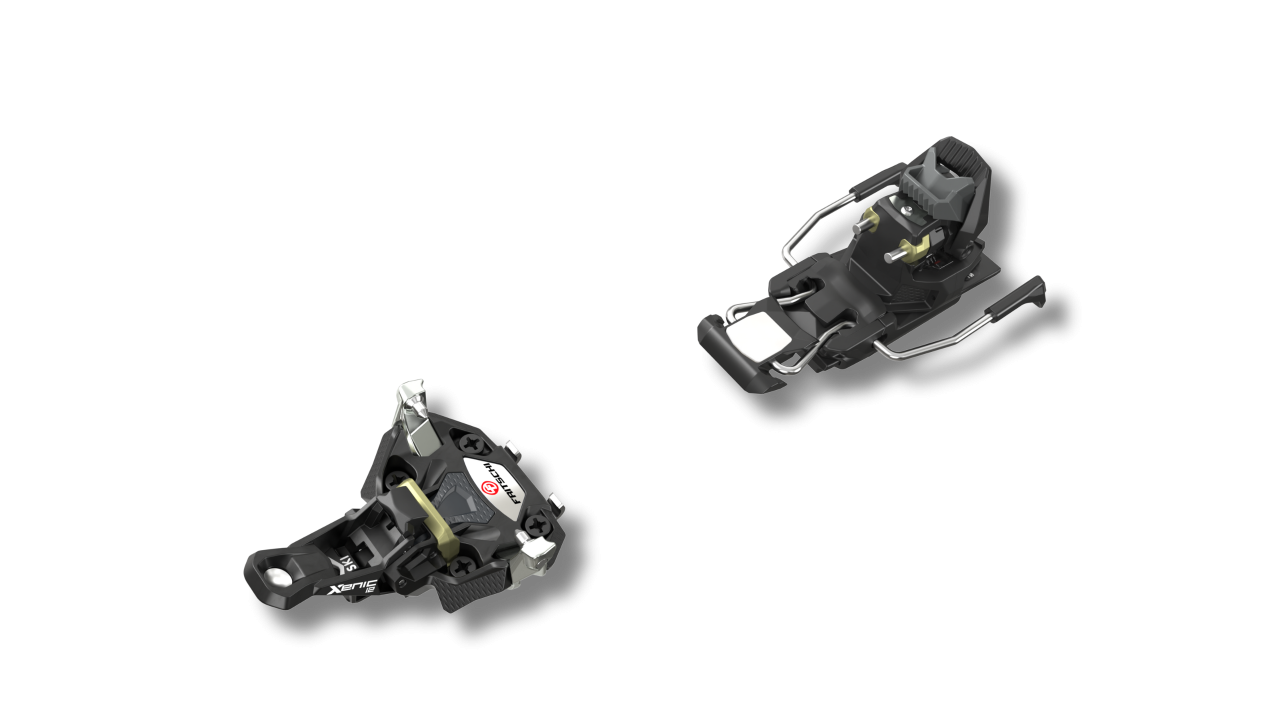
 TouringSystem: Tech binding with rotating, widely supported heel unit, Fritschi Safety SystemThe most complete lightweight binding for high-mountain skiers with added downhill performance and safety.


- New

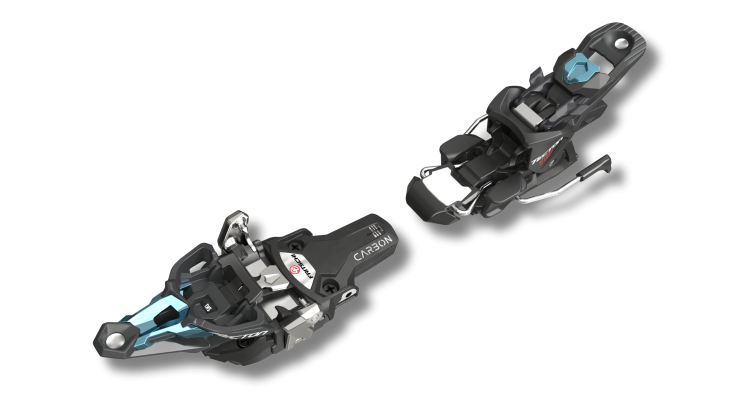
 Freeride & Free TouringSystem: Hybrid tech pin-binding with fixed alpine heel piece, Fritschi Safety SystemFor freeskiers seeking active, dynamic skiing adventures in challenging terrain.


More news
 Chile: Skiing in the Land of VolcanoesWhere fire meets snow There are places in the world where skiing is more than just a sport, it's a deep sensory experience, a constant dialogue ...
 Safety GearFritschi touring bindings distinguish themselves through new technological solutions. In a nutshell: strong on the descent and uncompromising in the ...
 Ski touring with the familyAs ski touring has evolved, so has the need to experience ski touring with the kids. But what is there to consider? What is important so that the ...
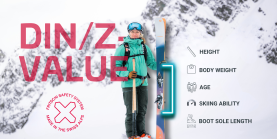
 What is a DIN-Value?The Correct DIN-/Z-Value Setting in Ski Touring Bindings: Safety and Performance in Focus.